
Guy Singleton - Residential Cinema Designer & Engineer
Guy Singleton is a British residential cinema designer and engineer with more than 25 years' experience designing high-performance private cinemas and screening rooms. He is the co-founder of Imagine This, creator of The Cinema Designer, an international industry educator and a long-standing contributor to professional standards and best practice.
Guy's career combines extensive practical cinema design with engineering, professional education, industry standards and software development.
From compact private cinemas to technically demanding reference screening rooms, his approach is founded on one principle: exceptional cinema performance should be engineered, not left to chance.
Guy's approach to cinema design is engineering-led.
A high-performance residential cinema is not simply a collection of excellent equipment. Nor can audio, acoustics, video or interiors be considered independently. It is a complete environment in which architecture, room geometry, seating, sightlines, acoustics, loudspeaker deployment, bass performance, projection, lighting, electrical infrastructure, ventilation, control and user experience all interact.
Successful cinema design therefore requires those disciplines to be considered together from the outset.
Guy's background in electrical and electronic engineering has strongly influenced the way he works. Rather than beginning with a preferred collection of products, his design process begins with the room, the people who will use it and the performance the finished cinema needs to achieve.
The technology comes later.
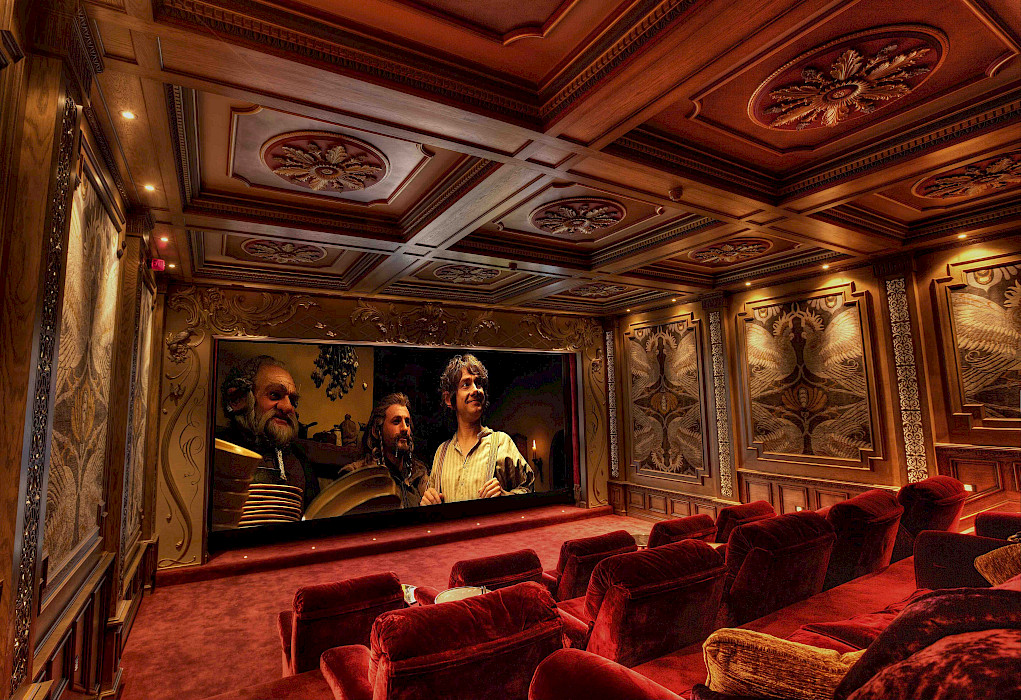
The role of a cinema designer extends far beyond selecting a projector, loudspeakers and acoustic treatments.
Before construction begins, decisions about room dimensions, seating positions, screen size, sightlines, loudspeaker locations and equipment accommodation can determine much of the ultimate performance of the room.
Each decision affects another.
Room geometry influences low-frequency behaviour. Seating positions affect both audio performance and viewing geometry. Screen dimensions influence projector selection and speaker placement.
Loudspeaker and subwoofer deployment must work with the room and its acoustic treatment. Lighting needs to complement both the architecture and the viewing environment. HVAC must maintain comfort without introducing unacceptable background noise. Electrical, data and control infrastructure must support the system reliably and allow it to be maintained long into the future.
Guy considers these elements as parts of one integrated cinema system
This complete-system approach has shaped both his own cinema work and, later, the professional design tools he developed for the wider industry.
Guy has led Imagine This's cinema design work for more than two decades, designing private cinemas, media rooms and screening rooms in the UK and internationally.
The projects vary enormously. Some are compact rooms in which every centimetre needs to be carefully considered. Others are sophisticated media spaces where high-performance technology must disappear almost completely into an architectural interior.
At the other extreme are large private cinemas requiring extensive acoustic, audio, video and engineering analysis. One international project involved a private cinema of approximately 2,200 cubic metres with a screen around 22 metres wide. Its scale required close collaboration with the architect and the integrated consideration of construction, room acoustics, seating, projection, loudspeaker and subwoofer deployment, and a large multichannel audio system.
For Guy, however, size alone doesn't make a cinema technically interesting. A small room with difficult proportions can present just as significant a design challenge. The objective remains the same: to understand the constraints, model the room and engineer the best possible experience within them.
The cinema projects published by Imagine This represent only a selection of Guy's work.
Privacy and discretion are particularly important within the high-end residential market, and many clients prefer that their homes, projects and identities are never publicised. Consequently, a significant proportion of the cinemas Guy has designed cannot be shown publicly.
Where clients have given permission, our case studies document both the completed room and the engineering challenges behind it.
One of Guy's most significant projects was a private screening room designed and built for Academy Award-winning film director Sir Peter Jackson. The brief demanded exceptionally high technical performance while also creating a cinema that could be enjoyed intuitively by family and guests. The project encompassed the complete cinema environment, including room acoustics, loudspeaker and subwoofer deployment, a bespoke 250-inch acoustically transparent screen, high-output projection, lighting and electrical systems, networking, equipment architecture, control and final HAA, THX and ISF calibration. Sir Peter subsequently said: “I engaged Guy Singleton and the team at Imagine This to design and build a cinema room for me in the UK.” He described the completed room as performing at the “highest technical level”. The project was recognised by Guy's industry peers when Imagine This was named the winner of the 2013 CEDIA Award for Best Home Theatre Over £100,000.
View the Luxury Screening Room project
High-performance cinema design is not dependent upon having a very large room. This compact cinema presented a very different engineering problem, requiring careful management of viewing geometry, seating, speaker locations and the available space to achieve an immersive result within a restricted footprint.
View the Small Home Cinema project.
Not every high-performance cinema should look like a traditional dedicated cinema. The Elephant in the Room demonstrates another important aspect of Guy's work: integrating serious audio and video performance into an interior where technology needs to remain discreet.
View the Elephant in the Room project.
Contemporary immersive cinema places increasingly demanding requirements on room design,loudspeaker deployment, processing, amplification and calibration. This project demonstrates the application of modern immersive-audio engineering within a complete residential cinema environment.
View the Immersive Home Cinema project.
At approximately 2,200 cubic metres, this extraordinary private cinema required engineering on a scale far beyond that of a conventional residential cinema. Guy and Imagine This worked with the architectural team on the room itself as well as its acoustic environment, seating, projection strategy, loudspeaker deployment, bass system and multichannel audio design.
View the Private Cinema project.
Guy led the design of a specialist demonstration cinema for professional loudspeaker manufacturer PMC. Unlike a conventional showroom, the room needed to provide a technically credible environment in which PMC's products could be demonstrated to clients and industry professionals. The project required careful attention to room behaviour, acoustic performance and the objective engineering criteria needed to create an appropriate reference environment.
Explore more projects designed by Guy Singleton.
The Sir Peter Jackson screening room is particularly significant because it illustrates what Guy means by complete cinema design. The client's professional knowledge of filmmaking meant that the technical brief was unusually exacting.
The 270-cubic-metre room needed to achieve THX Reference-level audio performance. Acoustic treatments addressed absorption, reflection, diffusion and bass management, while the loudspeaker and subwoofer system was engineered to achieve the required output and more consistent low-frequency performance.
Video presented another challenge. A bespoke 250-inch acoustically transparent screen was combined with masking and multiple aspect-ratio presets, while a high-output Christie projection system provided the required image performance.
Behind the visible cinema was an equally carefully considered technical infrastructure: separate equipment racks, patching for maintainability, local networking, fibre and copper data infrastructure, power conditioning, system redundancy, maintenance controls and different levels of user access.
Final commissioning included HAA, THX and ISF calibration.
The result wasn't simply an impressive collection of cinema equipment. It was a complete engineered environment, designed around the room, the performance requirements and the people who would ultimately use it.
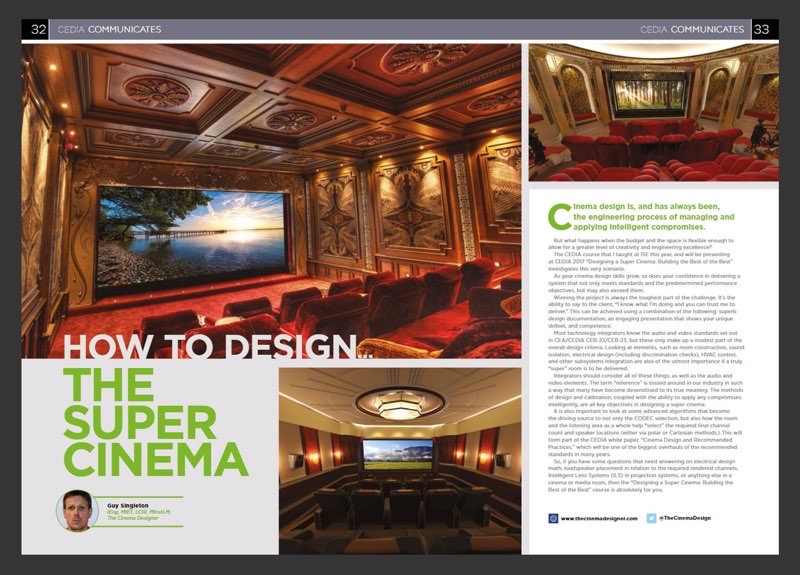
Guy's practical experience designing cinemas eventually led to another significant contribution to the industry: The Cinema Designer (TCD).
The idea came from a problem he encountered repeatedly as a working cinema designer.
Producing a properly engineered cinema proposal could involve days - and sometimes considerably longer - of calculations, drawings, product research and documentation. Much of that work needed to be undertaken before an integrator even knew whether a proposed project would proceed.
Guy began developing software to make his own design process faster and more consistent.
The objective wasn't to remove engineering from cinema design. It was to make sophisticated engineering more practical to perform on every project. What began as a tool created to solve Guy's own design problem eventually developed into a professional platform used by other cinema designers around the world.
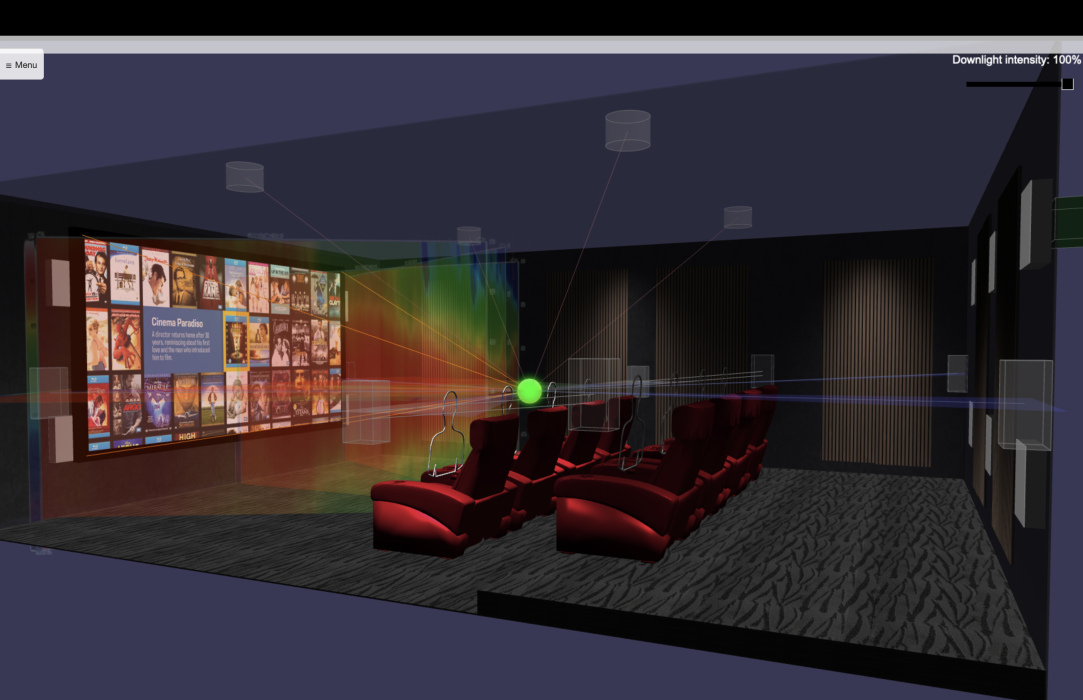
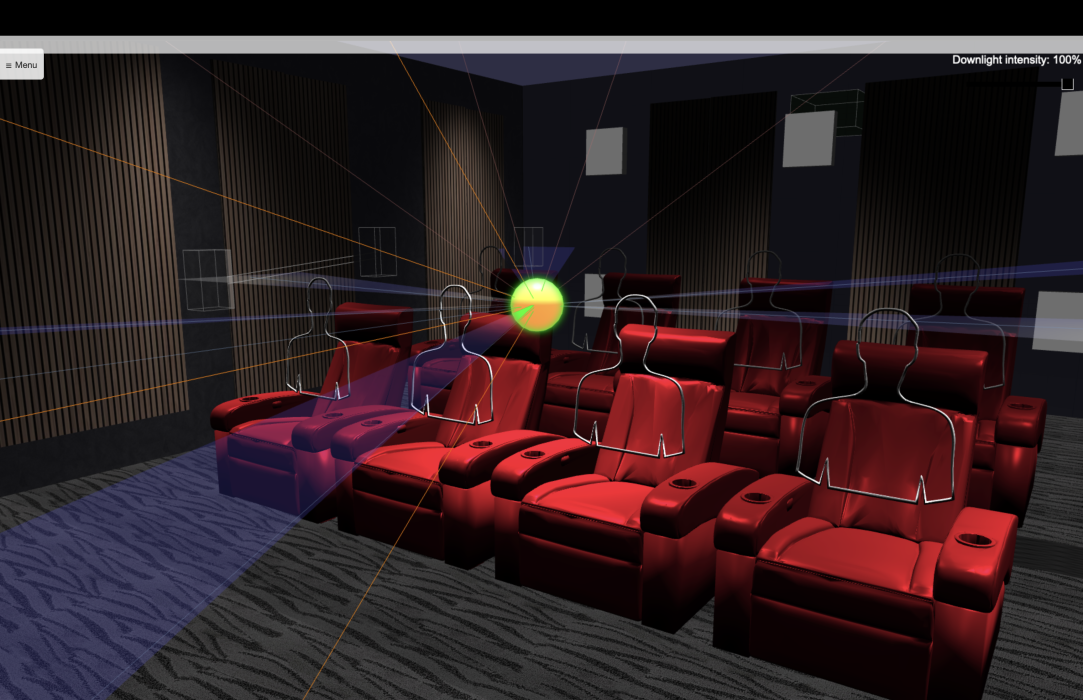
The Cinema Designer was developed to help professionals model, calculate and document critical elements of cinema design far more efficiently. Its capabilities have developed substantially over time and encompass areas including room and seating geometry, viewing analysis, screen design, loudspeaker placement, sound-pressure-level calculations, acoustic considerations, projection, equipment specification and technical documentation.
TCD received international industry recognition in 2017 when it won CEDIA's EMEA and US/APAC Best New Software Product award.
Today, TCD is used by cinema professionals internationally and continues to evolve alongside developments in residential cinema engineering. Its origins remain an important part of the story. The Cinema Designer was created by a cinema designer to solve the problems encountered when designing real cinemas.
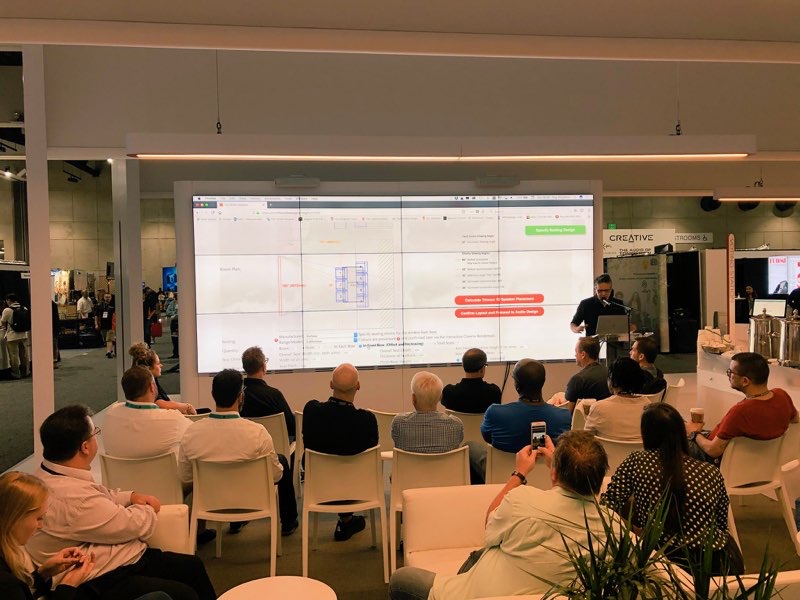
Guy has spent a significant part of his career sharing technical knowledge with other professionals.
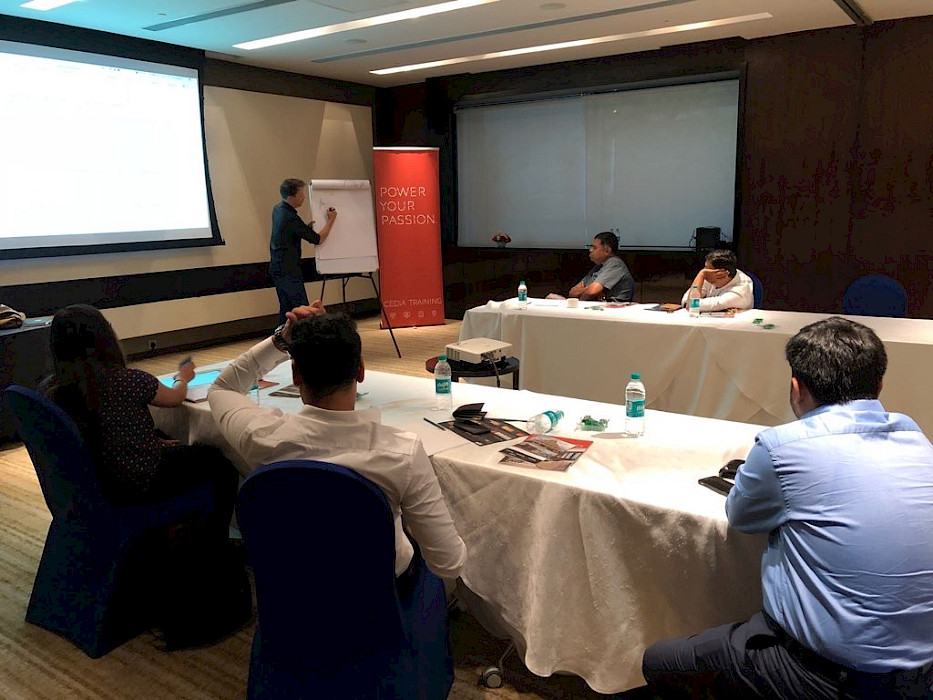
Over many years, he has taught home cinema design and associated engineering disciplines at CEDIA and other industry training events internationally. His education work has covered subjects including cinema design, video performance, electrical engineering and the technical disciplines involved in delivering complex residential technology systems.
Guy has also served as an Imaging Science Foundation (ISF) instructor for Europe, the Middle East and Africa, training professionals in the science, measurement and calibration of video systems. His professional training and qualifications have also included THX and Home Acoustics Alliance certification.
For Guy, education has always been closely connected to practical experience: understanding why something works is considerably more valuable than simply knowing that it does.
Guy's contribution to the residential technology and cinema industries extends beyond his own projects and businesses. A long-standing CEDIA member and volunteer, he has contributed substantial time to professional education, technical committees, industry initiatives, standards development and awards judging.
In 2016, Guy received the CEDIA Special Recognition Award for his contribution to the association and the wider industry. His standards work included acting as CEDIA's representative on an Institution of Engineering and Technology (IET) committee developing the Code of Practice for Low and Extra Low Voltage Direct Current Power Distribution in Buildings, to which he contributed more than 300 hours.
In 2017, Guy was named CEDIA Volunteer of the Year. CEDIA's recognition reflected 15 years of volunteering and encompassed international teaching, committee work, home-cinema best-practice development, standards activity and judging CEDIA Awards in the United States and internationally.
Guy's involvement in professional standards has continued, including participation in CEDIA's Professional Development Standards Committee.
Across his career, Guy's work and wider industry contribution have been recognised in several different ways.
2010 - Home Cinema Choice - Installer of the Year
2013 - CEDIA Award Winner - Best Home Theatre Over £100,000 Luxury Screening Room
2016 - CEDIA Special Recognition Award Recognising Guy's extensive voluntary contribution to professional education, technical standards and the industry.
2017 - CEDIA Best New Software Product The Cinema Designer
2017 - CEDIA Volunteer of the Year Recognising 15 years of voluntary contribution to CEDIA, including education, standards, committees, best practice and awards judging.
These awards recognise very different aspects of Guy's career: cinema design, innovation, education and professional contribution.

The different strands of Guy's career are closely connected.
Designing cinemas exposed engineering challenges.
Solving those challenges generated knowledge and new methodologies.
Sharing that knowledge led to education and standards work.
And the need to perform sophisticated design work more efficiently ultimately led to the creation of The Cinema Designer.
As a result, Guy's contribution to residential cinema extends beyond the individual rooms he has designed.
The engineering principles developed through practical project work have also been shared through professional education, standards activity, and software used by other cinema professionals internationally.
After more than 25 years working with residential technology, Guy remains wary of defining a great cinema by the equipment installed within it. Exceptional products matter, but even the finest projector, processor or loudspeaker cannot compensate for fundamental errors in room geometry, construction or system design.
A great cinema therefore begins with understanding.
Understanding the room.
Understanding the client.
Understanding the performance that needs to be achieved.
And understanding how hundreds of individual design decisions interact.
When those decisions have been made properly, the technology should ultimately become almost invisible.
The viewer shouldn't be thinking about loudspeakers, processors, projection, acoustic treatments, or control systems.
They should simply be immersed in the film.

Guy regularly shares his knowledge of cinema design and residential technology through technical articles and educational material.
Topics include room sizing and geometry, cinema audio, bass performance, projection, viewing considerations, and the engineering principles behind high-performance residential cinemas.
Dynamic Range 101 | LFE | Dialogue and Speech Intelligibility 101
Guy has also appeared in podcasts and long-form video discussions concerning cinema engineering, measurable performance and the development of The Cinema Designer.
Explore Guy Singleton’s articles, podcasts and industry contributions.
Read more about Guy's contributions to the industry.
Guy remains actively involved in cinema design through Imagine This, working with private clients and their professional teams on new-build, refurbishment and dedicated cinema projects.
Imagine This collaborates with architects, interior designers, lighting designers, M&E consultants, contractors and other specialists, providing cinema engineering from the earliest stages of a project through design, installation, commissioning and final calibration.
Early involvement is particularly valuable.
Decisions about room dimensions, construction, seating, screen location, speaker positions, lighting, ventilation and technical infrastructure can profoundly affect the finished cinema, and are considerably easier to address before construction begins.
If you are considering a dedicated private cinema, screening room or high-performance media room, Guy and the Imagine This team would be very happy to discuss the project with you.
Guy Singleton is co-founder and Principal Cinema Designer at Imagine This. He is also the creator of TheCinema Designer, professional cinema design software.
Last reviewed: September 2026